Category: Education and Policy

  • The Digital Divide: Why Access to Devices and Internet Matters in Education

    The Digital Divide: Why Access to Devices and Internet Matters in Education

    By The Public Lens Education Desk

     Digital learning can expand access to educational materials, but students without reliable devices, electricity, or internet access may struggle to participate fully. Institutions need to consider these differences when planning technology-based learning.

    Digital technology has changed how students access lecture materials, submit assignments, conduct research, communicate with lecturers, and collaborate on projects. Online platforms can make learning resources available beyond the classroom and allow students to review materials at different times.

    However, access to digital learning is not equal. Some students own laptops, have reliable internet connections, and can study in comfortable environments. Others depend on smartphones, shared devices, public computer facilities, or intermittent mobile data.

    These differences can affect how easily students participate in technology-based academic activities.

    More Than an Internet Connection

    The digital divide is not only about whether a student can connect to the internet. It also involves the type of device available, the reliability of electricity, the cost of data, digital skills, accessibility needs, and the quality of the learning environment.

    A student using a phone may be able to read a short announcement but struggle to edit a lengthy document, manage several browser windows, or complete a task that requires specialist software.

    Similarly, a student may have a laptop but lack a stable internet connection or sufficient power to use it consistently.

    The Cost of Participation

    Digital learning can introduce expenses that are not always visible in a course outline. Students may need to purchase data, charge devices, print materials, replace damaged equipment, or travel to a location with a reliable connection.

    These costs can become more difficult when several courses require online activities at the same time.

    Students who cannot participate consistently may appear disengaged even when the underlying problem is access rather than a lack of interest.

    Designing More Accessible Learning Activities

    Lecturers and institutions can consider access conditions when selecting digital tools and setting requirements. Where appropriate, materials can be provided in formats that are easier to download, read, and use on different devices.

    Instructions should identify the essential task and explain how students can seek assistance when technical problems occur. When a project requires software or equipment that not all students can access, the institution should consider available alternatives or opportunities to use shared facilities.

    This does not mean that every course must avoid demanding digital work. Students need to develop digital skills. The aim is to distinguish between the intended learning outcome and barriers that prevent students from demonstrating what they know.

    •Nigerian students working on computers in a school computer lab.
    Not every school has computers and a stable internet connection.

    Building Digital Skills

    Access to a device does not automatically mean that a student can use it effectively. Students may need guidance on file management, online research, document formatting, digital safety, collaboration tools, and responsible use of online information.

    Practical instruction can help students use available technology more productively and prepare for work environments where digital competence is expected.

    Institutions can also provide orientation, technical support, and access to computer laboratories or other learning facilities.

    Shared Responsibility

    Students should communicate genuine access difficulties early rather than waiting until a deadline has passed. Where possible, they can explore campus facilities, coordinate group work responsibly, or download materials when a reliable connection is available.

    However, students should not be expected to solve every structural problem individually. Institutions, education authorities, service providers, and other stakeholders all influence the availability and affordability of digital learning resources.

    Digital education can expand learning opportunities, but its benefits depend partly on whether students can access the tools required to participate. Reliable devices, affordable connectivity, electricity, digital skills, and appropriate course design all matter.

    Recognising these differences can help institutions make technology-based learning more effective and reduce the risk of excluding students because of circumstances beyond their control.


  • Why Career Guidance Should Begin Before Final Year

    Why Career Guidance Should Begin Before Final Year

     By The Public Lens Education Desk

     Students who begin exploring career options early may have more time to develop relevant skills, gain experience, and understand the expectations of their chosen fields before graduation.

    Many students begin thinking seriously about employment only when graduation approaches. At that point, they may start preparing a curriculum vitae, searching for internships, contacting potential employers, or wondering which professional path to follow.

    These activities are important, but starting earlier can make the process less rushed. University years provide opportunities to explore interests, develop practical skills, meet professionals, and test different career options before making long-term decisions.

    Career guidance should therefore be treated as part of the wider educational experience rather than a final activity carried out shortly before graduation.

    A Degree Does Not Automatically Define One Career

    Some courses lead towards established professions, while others provide knowledge and skills that can be applied across several industries. Students may also discover interests that differ from the career they originally imagined.

    A student studying mass communication, for example, may become interested in journalism, public relations, advertising, corporate communication, digital content, research, or media production. Each area has different expectations and may require additional practical skills.

    Exploring these possibilities early can help students understand which options suit their interests and strengths.

    Use Academic Activities to Build Evidence of Skill

    Course assignments can provide opportunities to develop work that demonstrates competence. Depending on the programme, students may produce reports, designs, research projects, videos, presentations, websites, or other practical outputs.

    Instead of treating every assignment as a task to submit and forget, students can identify work that demonstrates their abilities and retain suitable examples for a portfolio, subject to any rules about confidentiality and permitted use.

    The aim is not simply to collect files. Students should be able to explain the purpose of each project, their individual contribution, the decisions they made, and what they learned.

    Gain Experience Before Graduation

    Internships, volunteering, student organisations, professional events, part-time work, and supervised projects can help students understand how professional environments operate.

    Such opportunities may expose students to deadlines, teamwork, client expectations, workplace communication, and the need to revise work after receiving feedback.

    Not every student will have access to the same opportunities, and unpaid work may not be financially realistic for everyone. Students should consider the costs, learning value, safety, and relevance of an opportunity before accepting it.

    •Students talking to employer representatives at a campus career fair in Africa.
    Students meet employers at a campus career fair

    Build Professional Relationships Responsibly

    Career development can also involve learning from lecturers, alumni, professionals, and people working in areas of interest. Asking thoughtful questions and following up respectfully can help students understand industry expectations.

    Professional networking should not be reduced to requesting favours from people. Students can prepare by researching the person or organisation, explaining their interests clearly, and being specific about the information they hope to obtain.

    Maintaining a good reputation also matters. Reliability, respectful communication, and completing agreed tasks can influence how others view a student’s readiness for professional opportunities.

    Review Progress Regularly

    Students can set practical goals for each academic year. Early goals may include exploring possible careers and learning basic tools. Later goals may involve completing projects, gaining experience, building a portfolio, and preparing application documents.

    These goals should be reviewed as interests and circumstances change. A student does not need to have an entire career mapped out in the first year, but should gradually develop a clearer understanding of possible directions.

    Career preparation is more effective when it develops alongside academic learning. Students who explore career options, practise relevant skills, and seek suitable experience before final year may be better prepared to make informed decisions after graduation.

    The objective is not to rush students into choosing one permanent path. It is to give them enough information and experience to approach their next stage with greater confidence and practical preparation.

  • University Research: Why Evidence Matters Beyond the Classroom

    University Research: Why Evidence Matters Beyond the Classroom

     By The Public Lens Education Desk

     Research helps students investigate questions, assess claims, and reach conclusions supported by evidence. These skills are useful not only for academic assignments but also for professional decisions and public discussions.

    University assignments often require students to read existing studies, collect information, analyse findings, and present conclusions. These activities can appear to be requirements that must be completed for marks, but research skills have value beyond the classroom.

    In professional environments, people regularly face questions that cannot be answered reliably through assumptions alone. Employers may need to understand customer behaviour, journalists may investigate a public claim, and health communicators may need to explain evidence about a particular issue.

    The ability to ask clear questions and evaluate information can improve decisions in many fields.

    Start With a Clear Question

    Good research begins with a question that can be investigated. A topic such as social media and students’ academic performance may be too broad to examine effectively without further definition.

    A more focused question might investigate how a particular group of students uses social media during study periods or what students report about the relationship between online activity and concentration.

    The precise question influences the research method, information required, and conclusions that can reasonably be drawn.

    Choose Appropriate Sources and Methods

    Different questions require different methods. Researchers may analyse documents, conduct interviews, use questionnaires, observe behaviour, or examine existing data.

    The method should fit the question rather than being selected simply because it is familiar. A questionnaire may help gather responses from many people, but the quality of the results depends on the questions, sample, recruitment process, and honesty of respondents.

    Interviews may provide detailed explanations of experiences, but a small number of interviews cannot automatically represent the views of an entire population.

    Students need to understand what their chosen method can establish and where its limitations lie.

    Distinguish Evidence From Assumption

    Researchers sometimes enter a project with an expectation about what they will find. That expectation can influence how they interpret information or which results they pay attention to.

    Responsible research requires openness to findings that do not support the original assumption. Evidence should be assessed consistently, and unexpected results should not be hidden simply because they complicate the argument.

    Researchers should also avoid presenting correlation as proof that one factor caused another. Two things may occur together without one directly causing the other.

    Ethics and Accuracy

    Research involving people requires attention to consent, privacy, confidentiality, and potential harm. Participants should understand the purpose of the research and how their information will be used.

    Students should also represent sources accurately, acknowledge other people’s work, and avoid inventing data or altering findings to produce a preferred result.

    Where information is sensitive, researchers should follow institutional requirements and seek appropriate supervision.

    Applying Research Skills Outside University

    A journalist can use research skills to verify claims before publication. A public relations practitioner may investigate audience needs before designing a campaign. A business owner may study customer feedback before changing a product or service.

    In each case, evidence can help identify assumptions that need to be tested and questions that require further investigation.

    Research does not remove uncertainty from every decision. It provides a structured way to understand what is known, what remains unclear, and which conclusions are supported by the available information.

    Research is not only an academic exercise. It develops habits of questioning, verification, analysis, and careful communication that are useful in professional and public life.

    Students who understand how evidence is collected and interpreted are better equipped to assess claims, make informed decisions, and explain the reasons behind their conclusions.

  •  What Students Should Know About Education Policy Changes

     What Students Should Know About Education Policy Changes

     By The Public Lens Education Desk

     Changes in education policy can affect admissions, examinations, academic programmes, funding, and graduation requirements. Students need to verify official announcements and understand how each change applies to their own circumstances.

    Education policies influence how schools and universities operate. They may determine admission requirements, examination procedures, programme accreditation, funding arrangements, academic standards, and other aspects of the education system.

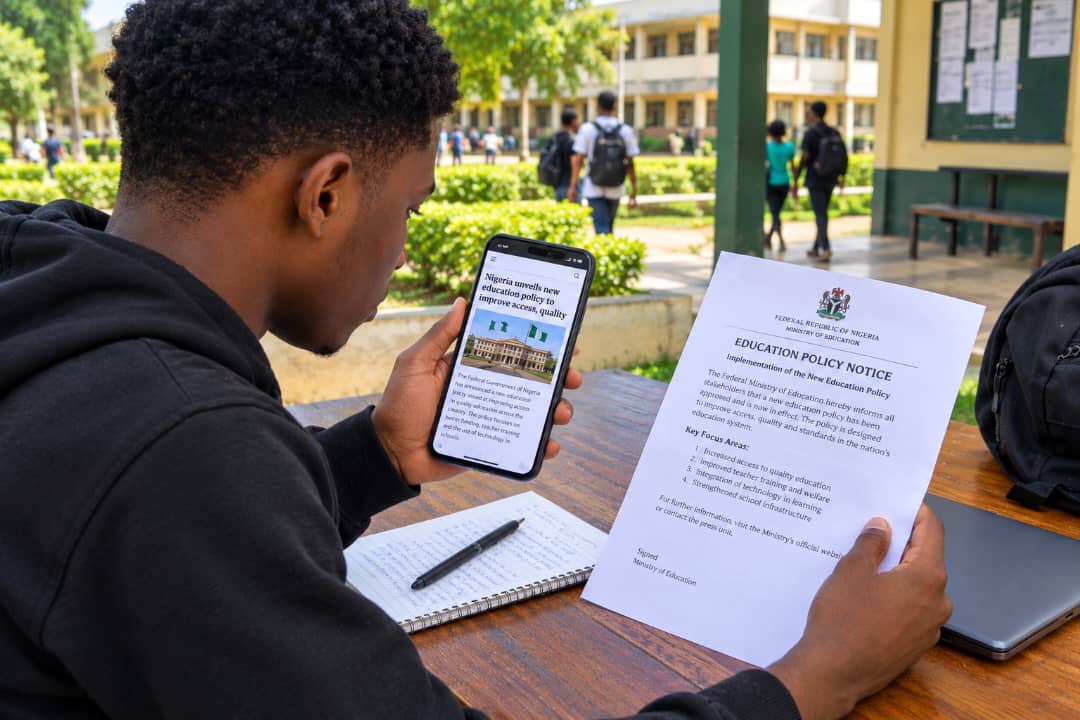
    When a policy change is announced, students may encounter conflicting explanations from news reports, social media posts, classmates, and informal conversations. Some messages may describe the proposal accurately, while others may exaggerate its effect or apply it to students who are not covered by the change.

    Understanding an education policy requires more than reading a headline. Students need to identify the institution responsible for the announcement, the details of the policy, and the people or programmes to which it applies.

    Find the Original Announcement

    The first step is to locate the official document or statement from the responsible authority. Depending on the issue, this may be a ministry, examination body, university management, regulatory agency, or another authorised institution.

    The original announcement may explain whether the change is proposed, approved, or already in effect. These stages are not interchangeable.

    A proposal may still be under consideration, while an approved policy may have an implementation date in the future. A news headline that does not distinguish between these stages can create unnecessary confusion.

    Understand Who Is Affected

    Not every policy applies to all students in the same way. A change may affect only new applicants, particular programmes, certain examination sessions, or students entering a specified academic year.

    Students should read the relevant details instead of assuming that a policy applies immediately to everyone.

    For example, a change to admission requirements may affect future applicants differently from students who have already been admitted. The official guidance should clarify the applicable dates and any transitional arrangements.

    When the announcement is unclear, students can contact the relevant administrative office for confirmation.

    A rolled diploma showing an education policy

    Check the Implementation Details

    A policy may establish a new requirement without explaining every practical step in the initial announcement. Students may need further information about deadlines, required documents, fees, application procedures, or how existing records will be treated.

    They should avoid making major decisions based only on a forwarded summary. Where an official document is available, reading it directly can help identify conditions that a brief social media post may have omitted.

    Reliable news organisations can provide context, but students should distinguish reporting about a policy from the policy document itself.

    The Role of Student Representatives and Journalists

    Student representatives can help communicate changes by sharing verified information and directing students to official sources. They should not present personal interpretations as formal instructions.

    Campus journalists also have a responsibility to explain what a policy means, who is affected, what remains unclear, and which authority can answer outstanding questions.

    Where a policy generates concern, reporting should include relevant explanations from the institution and, where appropriate, the perspectives of affected students and education specialists.

    Avoid Spreading Unverified Claims

    An inaccurate policy message can cause students to miss deadlines, pay unnecessary charges, or become worried about requirements that do not apply to them.

    Before sharing an announcement, check its date, original source, scope, and current status. If the information cannot be confirmed, state that it remains unverified rather than presenting it as established fact.

    Education policy can have practical consequences for students, so understanding policy changes is an important part of academic planning. Students should consult original announcements, identify who is affected, confirm implementation dates, and seek clarification when details are uncertain.

    Reliable information allows students to respond to changes based on evidence rather than rumours.

  • University Fees: Why Students Need Clear Information About Charges

    University Fees: Why Students Need Clear Information About Charges

    By The Public Lens Education Desk

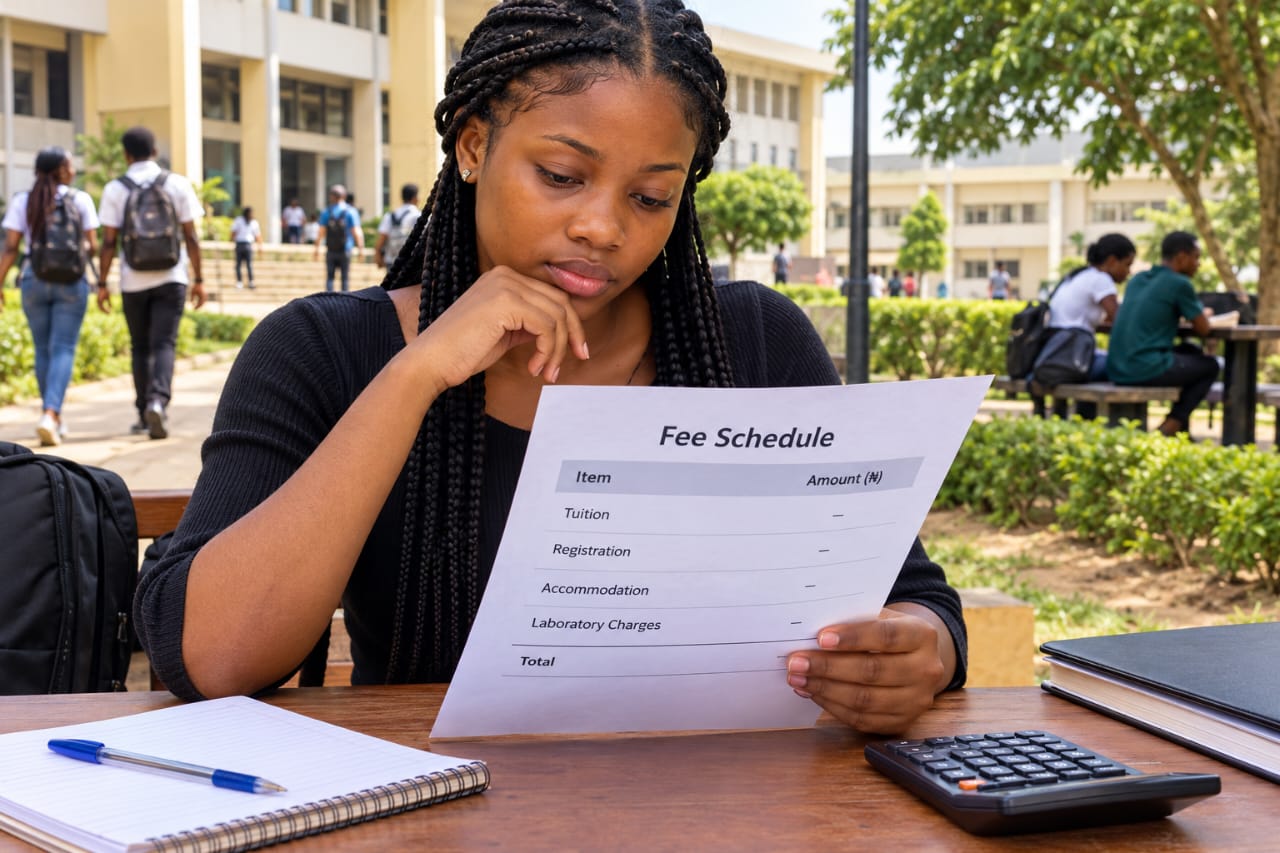
     University expenses may include tuition, registration, accommodation, laboratory charges, departmental levies, and other costs. Clear information helps students plan, identify legitimate payments, and question unexplained charges.

    Planning for university expenses can be difficult when students and their families do not have a complete picture of the costs involved. An admission offer may provide some information, but other charges may become clear only when registration begins or a new academic session approaches.

    Students may need to account for tuition where applicable, registration, accommodation, transport, learning materials, laboratory use, internet access, and other expenses connected to their programmes.

    The issue is not simply whether a charge is high or low. Students need to understand what each payment covers, which institution or department requires it, when it is due, and where official payment information can be obtained.

    Why Clear Information Matters

    When charges are communicated late, families may struggle to prepare the required funds. Students may delay registration, borrow money unexpectedly, or miss deadlines because they were unaware of a particular payment.

    Clear and timely information allows students to plan ahead and compare the expected costs with the resources available to them.

    It also helps prevent confusion when different messages circulate through class groups, student associations, or informal social media pages. A forwarded payment instruction may be outdated, incomplete, or incorrect.

    Distinguish Official Charges From Unverified Requests

    Students should confirm payment requirements through the institution’s official communication channels or the appropriate administrative office. They should check the purpose of the payment, the amount, the deadline, and the authorised payment method.

    A message containing a bank account number or a payment link should not be treated as official merely because it uses the university’s name or logo.

    Where a charge is unclear, students can request written clarification before making payment. They should keep receipts and transaction records for future reference.

    This is particularly important when payment instructions change or when a student needs to resolve a dispute about whether a payment was completed.

    Ask What a Charge Covers

    An explanation of a fee should identify the service, facility, or administrative process it supports. If a charge is described only in vague terms, students may need to ask the relevant office for more information.

    Questions should be directed to the institution responsible for the payment rather than relying entirely on assumptions from classmates. Students should also distinguish between mandatory institutional charges and optional activities or services.

    Where student representatives communicate concerns on behalf of their colleagues, they should gather accurate information and present the questions clearly.

    The Role of University Management

    Institutions can improve fee communication by publishing complete schedules, providing clear deadlines, explaining changes, and ensuring that official information is easy to locate.

    Where fees are revised, students need to know which charges have changed and when the new requirements take effect. Clear communication can reduce rumours and prevent avoidable disputes.

    Institutions should also provide appropriate channels for complaints, corrections, and requests for clarification.

    Planning Beyond Tuition

    Even when tuition or registration costs are known, students may still face other expenses. Transport, food, accommodation, textbooks, data, printing, and equipment can affect whether a student can participate fully in academic activities.

    Students and families can prepare a broader budget that considers these recurring costs. Such planning cannot eliminate financial difficulty, but it can make expenses easier to anticipate.

    Clear information about university fees supports planning, accountability, and confidence in administrative processes. Students should confirm payment instructions through official channels, retain records, and seek clarification when charges are not properly explained.

    Institutions, in turn, should communicate costs in a timely and accessible manner so that students understand their financial obligations before deadlines arrive.