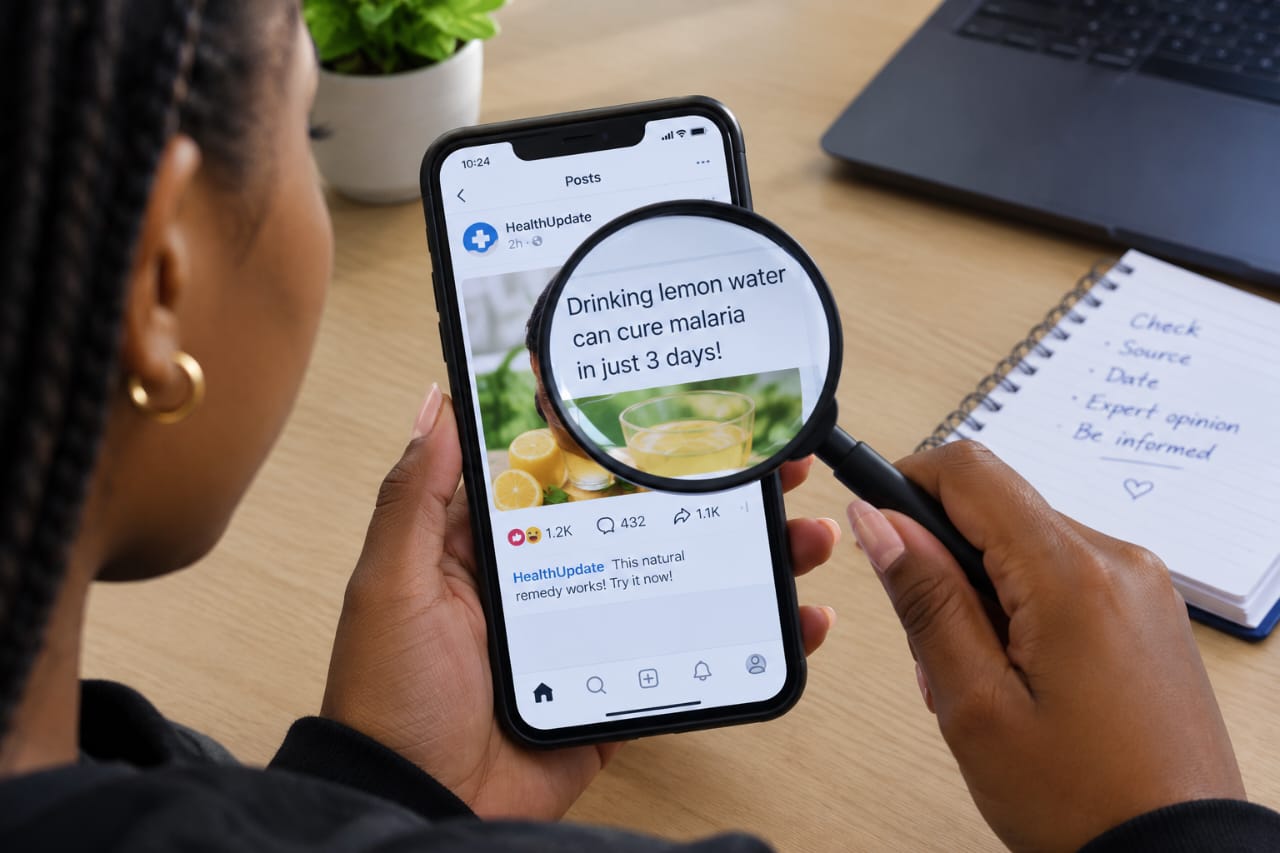
By The Public Lens Health Desk
Social media can make health information easier to access, but it also allows misleading claims to spread quickly. Readers need to assess sources, examine evidence, and recognise when professional medical advice is necessary.
A health tip can reach thousands of people within minutes. A short video may explain a home remedy, a social media post may warn about a particular food, or a message in a group chat may claim that a common medicine is dangerous.
Some online health content is produced by qualified professionals and reputable institutions. Other content is based on personal experience, commercial interests, misunderstanding, or deliberate misinformation.
The challenge is that reliable and unreliable information may appear on the same platform, sometimes using similar language and presentation. Readers therefore need to examine the evidence behind a health claim instead of judging it by its popularity.
Check Who Is Making the Claim
Start by identifying the person or organisation responsible for the information. Does the source have relevant professional qualifications? Is the organisation recognised for providing evidence-based health information? Can readers find information about the source’s expertise and accountability?
A large following does not establish medical expertise. Likewise, a person who describes a personal recovery may be sharing a sincere experience without having enough evidence to recommend the same approach to everyone.
Professional credentials matter, but readers should still examine the actual claim and the evidence supporting it.
 Look for Supporting Evidence
Health claims should be assessed according to the quality of the available evidence. A post may cite a scientific study, but the study may not support the conclusion being promoted.
Readers can ask whether the research involved people or was conducted only in laboratory settings, whether the sample was large enough to support the conclusion, and whether other studies have found similar results.
A single study rarely settles every question. Scientific understanding can change as better evidence becomes available, so credible health guidance should reflect the strength and limitations of the research.
Be Careful With Miracle Claims
Claims that a product cures many unrelated diseases, works instantly, or replaces all conventional treatment deserve particular scrutiny. Messages that discourage people from seeking medical care or instruct them to stop prescribed medication can create serious risks.
A product being described as natural does not automatically mean it is safe. Natural substances can cause side effects, interact with medicines, or be unsuitable for certain people.
People should discuss significant treatment decisions with a qualified health professional rather than relying on a viral post.
Understand the Difference Between Experience and Evidence
Personal stories can help people understand what living with a health condition feels like. They may also encourage people to seek support or ask useful questions.
However, an individual’s experience does not prove that the same treatment will work for everyone. A person may improve after using a product for reasons unrelated to that product, and another person may respond differently.
Responsible health communication distinguishes personal experience from evidence that supports a general recommendation.
What to Do Before Sharing
Before forwarding a health message, check its original source, date, evidence, and whether reputable health organisations provide consistent guidance. Be especially careful with advice about children, pregnancy, medication, serious symptoms, and infectious diseases.
If a claim cannot be verified, do not present it as established medical fact. When a post appears dangerous or misleading, use the platform’s reporting tools where appropriate and direct people towards credible information.Social media can help people learn about health, but it cannot replace careful assessment or individual medical advice. Readers should question extraordinary claims, examine the source, and distinguish scientific evidence from personal stories.
When health decisions could have serious consequences, checking with a qualified professional is safer than relying on a message simply because many people have shared it.