Category: politics

  • Beyond Campaign Promises: How Citizens  Can Track Government Projects

    Beyond Campaign Promises: How Citizens Can Track Government Projects

     By The Public Lens Politics Desk

    Government projects are often announced with ambitious promises. Citizens can assess progress by examining project details, checking developments on the ground, reviewing available records, and asking public officials specific questions.

    During election campaigns and public announcements, government officials may promise new roads, renovated schools, improved healthcare facilities, water projects, markets, and other infrastructure. Such announcements can raise expectations, especially in communities where public services have been inadequate for years.

    However, an announcement is not the same as a completed project. A project may be proposed, approved, funded, started, delayed, altered, or abandoned. Citizens need reliable information to understand which stage a project has reached.

    Tracking government projects is therefore an important part of public accountability. It helps residents assess whether public commitments are being implemented and whether the results meet the needs of the community.

    Begin With the Project Details

    The first step is to establish exactly what the government promised to deliver. Citizens should identify the project location, stated purpose, expected scope, responsible agency, announced timeline, and any publicly available cost information.

    For example, an announcement that a road will be rehabilitated does not explain whether the work covers the entire road or only a section. It may not specify whether drainage, pedestrian facilities, or other improvements are included.

    Clear project details provide a basis for assessing progress. Without them, discussions can become vague and different people may be referring to different expectations.

    • A half-built public building in a Nigerian community, left unfinished with weeds growing around it.
    • Some projects are started but never finished, which is why tracking matters.

    Compare the Promise With the Situation on the Ground

    Residents can observe visible developments and document them over time. Photographs, dated videos, and written notes may help establish whether work has started, whether equipment is present, or whether a site appears inactive.

    However, a photograph alone may not explain the full situation. Construction work can pause for legitimate reasons, and visible activity does not automatically mean that a project is progressing according to its approved schedule.

    Journalists and community groups should therefore combine observations with documentary evidence and requests for explanations from the responsible authorities.

    Examine Available Public Records

    Depending on the jurisdiction and the type of project, useful records may include budget documents, procurement notices, contract information, official project updates, audit reports, and statements from relevant public agencies.

    These documents can help answer questions about the project’s approved scope, funding arrangements, contractor, timeline, and implementation status.

    Citizens should be careful when interpreting financial records. A budget allocation, for example, does not necessarily mean that the full amount has been released or spent. Similarly, a payment record does not by itself establish that work was completed satisfactorily.

    Understanding what each document actually demonstrates is essential.

    Ask Specific Questions

    General complaints may attract attention, but specific questions are more useful for accountability. Citizens can ask which agency is responsible, what work has been completed, why the project has been delayed, and when the next stage is expected to begin.

    Where public officials respond, their explanations should be recorded accurately. If an authority does not respond, journalists should document their attempts to obtain a response and avoid inventing reasons for the silence.

    Contractors and other relevant stakeholders may also have information that helps explain delays or disputes.

    Why Community Participation Matters

    Residents often have knowledge of local conditions that may not be obvious from official documents. They may know when work stopped, which areas remain inaccessible, or whether the project addresses the original problem.

    Their observations can guide further investigation. However, personal accounts should be checked against other evidence before being used to support serious allegation.

    Monitoring public projects is not simply an exercise in criticising government. It is a way to establish whether public commitments are being fulfilled and whether public resources are producing the intended results.

    Citizens who combine observation, records, clear questions, and fair reporting can make project discussions more factual and more useful to their communities.


  • Political Debates: Why Listening to Opposing Views Matters

    Political Debates: Why Listening to Opposing Views Matters

     By The Public Lens Opinion Desk

     Political disagreement is normal in a democracy, but meaningful debate requires more than defending one’s preferred candidate or party. Listening carefully can help citizens examine evidence, understand competing interests, and reach better-informed conclusions.

    Political discussions can quickly become personal. A conversation about taxation, education, security, public spending, or leadership may turn into an argument about party loyalty or the character of political opponents.

    Social media can intensify this behaviour because users often respond to short statements without reading the full discussion. Some people enter political conversations mainly to defend their preferred side, while others treat every disagreement as an attempt to insult them.

    Yet political debate is useful precisely because citizens do not always agree. People have different experiences, economic circumstances, priorities, and ideas about how public problems should be solved.

    Listening to opposing views does not require abandoning personal convictions. It requires being willing to examine the reasoning and evidence behind another person’s position.

    Understand the Argument Before Responding

    A common problem in political discussions is responding to a position that the other person has not actually expressed. Someone may support a policy for one reason, while an opponent assumes that the person supports every decision made by the government.

    Before disagreeing, it helps to restate the argument in clear terms and ask questions where necessary. This reduces the likelihood of arguing against an inaccurate interpretation.

    For example, two people may agree that public education needs improvement but disagree about how the government should fund it. Recognising the shared concern can make the discussion more productive than immediately treating the other person as an enemy.

    Separate Evidence From Political Loyalty

    Political loyalty can influence how people interpret information. Supporters may accept claims that favour their preferred candidate without demanding evidence, while rejecting similar claims when they concern an opponent.

    A consistent approach requires the same standards for everyone. Claims about public spending, misconduct, election results, or policy outcomes should be examined according to the available evidence, not simply according to who made them.

    When evidence is incomplete, people should acknowledge the uncertainty rather than pretend that the issue has been settled.

    • Nigerian students taking part in a debate competition, with speakers presenting opposing arguments.
    • Debates teach students to hear the other side before they respond.

    Disagreement Can Reveal Different Priorities

    People may support different policies because they are concerned about different consequences. A business owner may focus on operating costs, a student may be concerned about education expenses, and a public health worker may prioritise access to healthcare.

    Understanding these perspectives can reveal why a policy is controversial and which groups may benefit or experience difficulties.

    This does not mean that every argument is equally strong. Some claims are better supported than others, and some proposals may have serious weaknesses. Listening is a way to assess arguments more carefully, not a reason to abandon critical thinking.

    Maintain Respect Without Avoiding Difficult Questions

    Respectful debate should not prevent people from asking challenging questions. Public officials, political candidates, and advocates should be expected to explain their claims and respond to relevant criticism.

    The important distinction is between questioning a person’s argument and attacking the person through insults, threats, or unsupported allegations.

    A strong debate allows participants to challenge evidence, identify contradictions, and explain why they disagree without deliberately misrepresenting one another.

    Democracy benefits when citizens can disagree without abandoning evidence or mutual respect. Listening to opposing views helps people identify weak arguments, understand different priorities, and reconsider assumptions.

  •  How to Identify Political Misinformation Before Sharing It

     How to Identify Political Misinformation Before Sharing It

    By The Public Lens Fact-Check Desk

     Political misinformation can spread quickly through social media, messaging groups, and online discussions. A few basic verification steps can help users avoid circulating false or misleading claims.

    Political discussions often become intense during elections, government announcements, public protests, and debates over controversial policies. During these periods, social media users may encounter screenshots, short videos, voice notes, and messages claiming to reveal secret decisions or expose wrongdoing.

    Some of these materials may contain accurate information. Others may be false, incomplete, old, or presented in a way that creates a misleading impression. The difficulty is that misleading content can appear convincing, especially when it supports what a person already believes.

    Sharing political information responsibly begins with recognising that a message is not automatically true because it comes from a trusted friend, appears in a large group, or contains an official-looking image.

    Check the Original Source

    One of the first questions to ask is where the information came from. A screenshot may show a statement attributed to a government agency without identifying the original publication. A forwarded message may claim that an official has announced a new policy but provide no date, document, or link.

    Where possible, locate the original statement. Check the official website or verified communication channel of the institution involved. If a news organisation has published the report, read the report rather than relying only on a headline or a cropped screenshot.

    An official source is useful for confirming what an institution has announced, although official statements should not automatically be treated as independent proof that every claim within them is accurate.

    Pay Attention to Dates and Context

    Old photographs and videos are frequently recirculated during new political events. An image of a protest from one year may be presented as evidence of a demonstration that supposedly happened yesterday.

    Check when the material was originally published and whether the location matches the claim. Read beyond the caption. A video may show only a small part of an event, while the accompanying message makes a much broader claim about what happened.

    A genuine photograph can still be used to support a false story if its date, location, or context is misrepresented.

    Compare Independent Reports

    When a claim is important, look for credible reports from more than one source. Independent reporting can help establish whether the event occurred and whether key details agree.

    However, several websites repeating the same unverified social media post do not necessarily provide independent confirmation. Trace the reports back to their original sources and examine whether they have conducted their own verification.

    For serious allegations, seek documentary evidence and relevant responses where possible.

    Recognise Emotional Manipulation

    Political misinformation often uses language designed to create anger, fear, or excitement. Messages may instruct readers to share immediately, claim that the media are hiding a major event, or suggest that anyone who questions the information is supporting the opposing side.

    These techniques encourage people to react before thinking. A responsible reader should slow down, separate evidence from opinion, and ask whether the material provides enough information to support its conclusion.

    What to Do When You Cannot Verify a Claim

    Not every claim can be confirmed immediately. When reliable evidence is unavailable, the responsible decision is to withhold the claim rather than present it as established fact.

    If you have already shared misleading information, correct the mistake clearly. Deleting the original message without explaining the correction may leave others believing that the claim remains true.

    Every social media user can contribute to a more responsible political information environment. Before sharing a political claim, check its source, date, context, supporting evidence, and independent confirmation.

    The key question is not whether a message agrees with your political position. It is whether the evidence supports what the message says.

  • Student Elections: What Should Matter When Choosing a Representative?

    Student Elections: What Should Matter When Choosing a Representative?

    By The Public Lens Campus Desk 

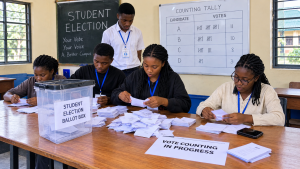
    Student elections offer an opportunity to practise democratic participation. Choosing representatives should involve more than popularity, friendship, campaign excitement, or promises that candidates may struggle to fulfil.

    Student elections are an important part of campus life. They determine who represents students in discussions with university management, organises student activities, communicates grievances, and participates in decisions affecting the student community.

    For many students, these elections are also their first direct experience of choosing representatives within an organised institution. The process can teach valuable lessons about leadership, accountability, political communication, and responsible citizenship.

    However, student elections can become competitions based mainly on popularity. Candidates may be supported because they belong to a particular friendship group, have a large social media following, or are known for entertaining their classmates. While personal relationships can influence how people choose, they should not replace a serious assessment of the candidates.

    Look Beyond Popularity

    A candidate may be well known across campus without having the skills required for the position being contested. Another candidate may be less visible but have a clear understanding of students’ concerns and a realistic plan for addressing them.

    Voters should therefore consider what the position requires. A representative may need to communicate with university officials, organise meetings, manage funds, coordinate volunteers, document decisions, and report back to students.

    The ability to perform these responsibilities matters more than the ability to attract attention during a campaign.

    Examine the Promises

    Campaign promises provide an opportunity to assess whether candidates understand the problems students face. However, promises should be examined carefully.

    A candidate may promise better learning facilities, improved access to information, more transparent student leadership, or more effective communication. Voters should ask how these goals would be pursued, what resources might be required, and which institutions have the authority to approve the proposed changes.

    For example, a student representative may be able to raise concerns about a university facility and negotiate with the appropriate office. The representative may not have the authority to independently approve major construction or change university-wide financial policies.

    A realistic candidate should explain these limitations rather than promise outcomes that depend entirely on other people.

    Accountability After the Election

    The responsibility of a representative does not end when the election is over. Students should expect regular communication about meetings, decisions, challenges, and progress on campaign commitments.

    Candidates should also explain what they intend to do when a proposal is rejected or delayed. Leadership is not measured only by the number of promises fulfilled. It also involves communicating honestly when circumstances prevent a commitment from being achieved.

    Students can support accountability by attending open meetings, reading official updates, asking relevant questions, and keeping records of commitments made during campaigns.

    The Role of Voters

    Voters also have responsibilities. Sharing unverified allegations about candidates, using threats to influence voting, or deliberately spreading misleading campaign material undermines the credibility of the process.

    Students should assess claims before sharing them and allow candidates to respond to serious allegations. They should also respect the choices of other voters, even when those choices differ from their own.

    Student elections should be treated as more than a campus popularity contest. They provide an opportunity to choose people who can represent collective interests, communicate effectively, and accept responsibility for their decisions.

    Before voting, students should ask three questions: Does this candidate understand the issues? Are the promises realistic? Is the candidate prepared to account for decisions after the election?

    The answers can help students make more informed choices and build a stronger culture of responsible leadership on campus.


  • Why Young People Should Pay More Attention to Local Government

    Why Young People Should Pay More Attention to Local Government


    By The Public Lens Editorial Team

    Decisions made by local governments affect roads, markets, sanitation, public health, and other aspects of daily life. Yet many young people pay more attention to national politics than to the government closest to their communities.

    When political discussions begin, many young people immediately turn their attention to the President, governors, senators, and members of the House of Representatives. These positions attract public attention because their holders make major decisions and regularly feature in the news. However, another level of government often receives less attention than it deserves: local government.

    Local governments are expected to address issues that affect people in their immediate communities. Depending on the country’s legal and administrative arrangements, their responsibilities may include aspects of local roads, markets, sanitation, primary healthcare, community facilities, and local development. These responsibilities make local government important to students, traders, artisans, parents, and other residents.

    Understanding local government is therefore not only a concern for politicians or people interested in public administration. It is part of being an informed citizen.

    How Local Government Affects Daily Life

    Consider a community where waste is collected irregularly, a public market has poor drainage, or a road becomes difficult to use during the rainy season. Residents may complain about these problems without knowing which government institution is responsible for addressing them.

    Some problems may fall within the responsibilities of local authorities, while others may require action from state or federal agencies. Knowing the difference helps citizens direct their complaints to the appropriate institutions instead of assuming that every public problem is the responsibility of the same government.

    Local government decisions can also influence how public facilities are maintained, how community projects are prioritised, and how local needs are communicated to higher levels of government.

    Why Young People Should Be Interested

    Young people are not separate from the communities in which they live. Students depend on roads and transport systems to reach school. Young business owners depend on market conditions, public infrastructure, and local regulations. Families depend on public services that affect their health and safety.

    Paying attention to local government can also help young people understand how public money is allocated and whether elected representatives are fulfilling their responsibilities.

    Citizens can begin by identifying their local government area, learning the names and responsibilities of relevant elected officials, attending public meetings where possible, and following credible reports about local projects.

    Moving Beyond Complaints

    Complaining about poor public services may draw attention to a problem, but informed follow-up can make the complaint more useful. Residents can document the problem, establish when it began, identify the responsible authority, and ask what action has been taken.

    Where public records are available, citizens and journalists can examine budgets, project announcements, expenditure records, and completion reports. They should also give the relevant authorities an opportunity to explain their decisions.

    Democracy requires more than voting during general elections. It also requires citizens to pay attention to decisions made between elections. For young people, understanding local government is a practical way to connect political participation with the conditions they experience every day.

    The first step is simple: know which institutions are responsible for the problems affecting your community, and learn how to hold them accountable through lawful and informed participation.